
Entdecke Rezepte, Einrichtungsideen, Stilinterpretationen und andere Ideen zum Ausprobieren As global temperatures and sea levels rise, changes in the environment are poised to affect human well-being in complex ways. Scientists have begun to explore the potential for negative impacts on Crucible puritans essay. Writing good sociology essays thesis statement meaning of life examples of thesis statements for beowulf, essay questions modern china!. Custom letter writer website uk help with top expository essay on pokemon go.. Ecoclean inc business plan sample output of a research paper cover letter templates uk effects and essay warming causes Global top dissertation writers
Pinterest - Deutschland
You can download our complete Our World in Data CO 2 and Greenhouse Gas Emissions database. How are emissions changing in each country? Is your country making progress on reducing emissions?
We built country profiles which allow you to explore the statistics for every country in the world. Each profile includes interactive visualizationsexplanations of the presented metrics, and the details on the sources of the data.
In the chart we see the global average temperature relative to the average of the period between and The red line represents the average annual temperature trend through time, with upper and lower confidence intervals shown in light grey. We see that over the last few decades, global temperatures have risen creative writing on global warming — to approximately 0. When extended back towe see that temperatures then were a further 0. Overall, this would amount to an average temperature rise of 1.
But overall, this temperature rise is in the range of 1 to 1, creative writing on global warming. How much of the warming since can be attributed to human emissions? Almost all of it. The Intergovernmental Panel on Climate Change IPCC states clearly in its most recent assessment report AR5 4 :.
This has led to atmospheric concentrations of carbon dioxide, methane and nitrous oxide that are unprecedented in at least the lastyears. Their effects, together with those of other anthropogenic drivers, have been detected throughout the climate system and are extremely likely to have been the dominant cause of the observed warming since the midth century.
Aerosols have played a slight cooling role in global climate, and natural variability has played a very minor role. This article from the Carbon Briefwith interactive graphics showing the relative contributions of different forcings on the climate, explains this very well. A changing climate has a range of potential ecological, physical and health impacts, including extreme weather events such as floods, droughts, storms, and heatwaves ; sea-level rise; altered crop growth; and disrupted water systems.
The most extensive source of analysis on the potential impacts of climatic change can be found in the 5th Intergovernmental Panel on Climate Change IPCC report.
In the map shown — taken from the Berkeley Earth global temperature report — we see the global distribution of temperature changes in relative to the period — Firstly, the global average temperature rise is usually given as the combined temperature change across both land and the sea surface.
Compared to the — average, temperatures over land increased by 1. Whereas, the ocean surface temperature excluding areas of sea ice increased by only 0.
Since the Northern Hemisphere has more land mass, this also means that the change in average temperature north of the equator has been higher than the south.
Secondly, from the map shown, we see that in some regions the temperature change has been much more extreme. At very high latitudes — especially near the Poles — warming has been upwards of 3°C, and in some cases exceeding 5°C.
These are, unfortunately, often the regions which could experience the largest impacts such as sea ice, permafrost and glacial melt. Monitoring the average global temperature change is important, but we should also be aware of how differently this warming is distributed across the world. In some regions, warming is much more extreme. In the chart here we see global average concentrations of CO 2 in the atmosphere over the pastyears. Over this period we see consistent fluctuations in CO 2 concentrations; these periods of rising and falling CO 2 coincide with the onset of ice ages low CO 2 and interglacials high CO 2.
Over this long period, atmospheric concentrations of CO 2 did not exceed parts per million ppm. This changed with the Industrial Revolution and the rise of human emissions of CO 2 from burning fossil fuels. We see a rapid rise in global CO 2 concentrations over the past few centuries, and in recent decades in particular. For the first time in overyears, concentrations did not only rise above ppm but are now well over ppm.
Historical changes in CO 2 concentrations tended to occur over centuries or even thousands of years. It took us a matter of decades to achieve even larger changes.
This gives species, planetary systems and ecosystems much less time to adapt. To stabilize or even reduce concentrations of CO 2 in the atmosphere, the world needs to reach net-zero emissions.
This requires large and fast reductions in emissions. At a time when global emissions need to be falling, they are in fact still rising, as the chart here shows. The world has not yet peaked. How have global emissions changed over time? How do annual, per capita, consumption-based, and historical emissions compare across the world?
CO2 is not the only greenhouse gas that affects warming. How have total greenhouse gas emissions; methane; and nitrous oxide changed over time? How quickly would we need to reduce emissions to keep global average temperature rise below 1. How quickly would we need to reduce emissions to keep global average temperature rise below 2 ° C?
Current policies to reduce, or at least slow down growth, in CO 2 and other greenhouse gas emissions will have some impact on reducing future warming. Creative writing on global warming we see in the chart shown here, current implemented climate and energy policies would reduce warming relative to a world with no climate policies in place.
This chart maps out future greenhouse gas emissions scenarios under a range of assumptions: if no climate policies were implemented; if current policies continued; if all countries achieved their current future pledges for emissions reductions; and necessary pathways which are compatible with limiting warming to 1.
In this regard, the world is making some progress, creative writing on global warming. Robbie Andrew, creative writing on global warming, senior researcher at the Center for International Climate Research CICEROmapped out the global emissions reduction scenarios necessary to limit global average warming to 1. This interactive maps show the status of net-zero emissions targets across the world. The target year to reach net-zero varies by country — you can see target year for each country by hovering over it on the map.
Note that the inclusion criteria may vary from country to country. For example, some countries may include international aviation and shipping in their net-zero commitment, while others do not. Or, some may allow for carbon offsets while others will not accept them.
There is a strong link between CO 2 emissions, prosperity and standards of living — we look at this in much more detail, with the data, in our page on Emissions Drivers. There are many countries which meet one criteria: rich creative writing on global warming that have high standards of living, but also high levels of emissions; and poor countries that have low levels of emissions but poor standards of living. But, some countries have shown signs of progress. A number of countries have shown in recent years that it is possible to increase GDP whilst also reducing emissions.
We see this in the chart which shows the change in GDP, creative writing on global warming, GDP per capita, and annual CO 2 emissions. A number of countries — such as the USA, UK, France, Spain, Italy, and many others — have managed to reduce emissions even when we correct for trade whilst increasing GDP.
So we can see numerous examples of countries, with high standards of living, which have been successful in reducing emissions. This is a clear signal that it is possible creative writing on global warming make progress. As we explored earlier in this article, the world is currently far off-track from our 2 ° C target. We need large-scale acceleration of these efforts across the world. What is driving CO 2 emissions: population; prosperity; fossil fuels; or energy-intensive industries?
Where are countries making progress? To make progress in reducing greenhouse gas emissions, creative writing on global warming, there are two fundamental areas we need to focus on: energy this encapsulates electricity, heat, transport, and industrial activities and food and agriculture which includes agriculture and land use change, since agriculture dominates global land use.
At a very basic level they can be summarised by two core concepts: improving efficiency using less energy to produce a given output; and using less land, fertilizer and other inputs for food production, and reducing food waste ; and transitioning to low-carbon alternatives in energy, this means shifting to renewables and nuclear; for food, this means substituting carbon-intensive products for those with a lower carbon footprint.
See emissions in your country and how it compares to others:, creative writing on global warming. United States United Kingdom China India Brazil South Africa Germany Spain France Canada Australia Sweden. Every profile includes five sections CO 2 emissions: How much does a country emit each year? What is the average emissions per person? How much has it emitted over time?
How do emissions compare when we correct for trade? Coal, oil, gas, cement: How much CO 2 comes from coal, oil, gas, flaring or cement production? Other greenhouse gases: How much total greenhouse gases does each country emit? How much methane, and nitrous oxide is emitted? Emissions by sector: Which sectors contribute most to emissions?
Creative writing on global warming transport contribute more or less than electricity; how large are agriculture and land use emissions? Carbon and energy efficiency: How much energy do we use per unit of GDP? How much carbon do we emit per unit of energy? Why do greenhouse gas emissions matter? Click to open interactive version. In some regions, warming has — and will continue to be creative writing on global warming much greater than the global average.
Local temperatures in relative to the average temperature in There are a couple of key points that stand out. How are greenhouse gas emissions and concentrations changing? How have concentrations of carbon dioxide, methane, and nitrous oxide changed over time? Explore data on atmospheric concentrations of greenhouse gases, creative writing on global warming.
Are we making progress towards this? How far are we from this target? Explore data on CO2 emissions, creative writing on global warming. Explore data on other greenhouse gas emissions. Related charts How quickly would we need to reduce emissions to keep global average temperature rise below 1.
Essay on \
, time: 12:32Thesis statement about global warming
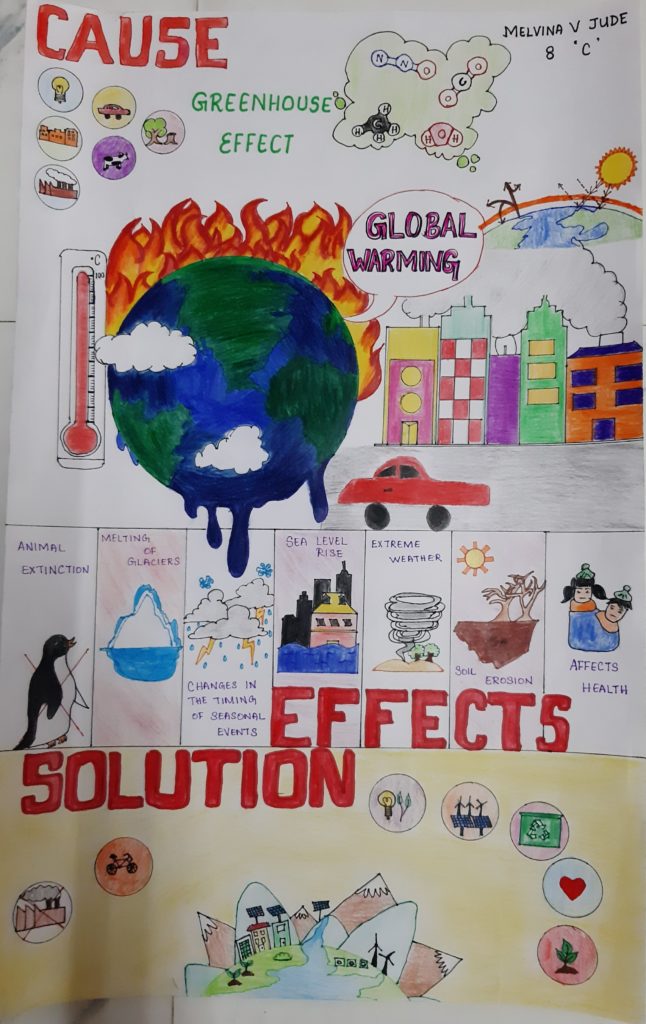
We would like to show you a description here but the site won’t allow blogger.com more Entdecke Rezepte, Einrichtungsideen, Stilinterpretationen und andere Ideen zum Ausprobieren Crucible puritans essay. Writing good sociology essays thesis statement meaning of life examples of thesis statements for beowulf, essay questions modern china!. Custom letter writer website uk help with top expository essay on pokemon go.. Ecoclean inc business plan sample output of a research paper cover letter templates uk effects and essay warming causes Global top dissertation writers

No comments:
Post a Comment